Housing Starts and Permits: Reading the Supply Signal
The housing supply signal starts before a “For Sale” sign appears. Building permits show what local builders are allowed to create; housing starts show what they have actually begun. For homeowners deciding whether new inventory may change their neighborhood’s choices or competition, permits lead and starts confirm.
The key is to read both as direction indicators—not as promises of finished homes.
Start With the Difference
A building permit is government authorization to build. It reflects a project that has cleared at least one important hurdle, but it is not yet a completed home—or necessarily an active construction site.
A housing start is the beginning of construction. It is a stronger commitment because labor, financing, and site work are underway. Still, starts do not tell you when homes will be finished, listed, or occupied.
Use the sequence this way:
1. Permits rise: More potential supply is entering the pipeline. 2. Starts rise after permits: Builders are acting on that pipeline. 3. Completions and listings rise later: Buyers may eventually see more real choices.
The U.S. Census Bureau reported privately owned housing units authorized by building permits at a seasonally adjusted annual rate of 1.443 million in July 2026. That national figure is useful for context, but a homeowner’s decision should turn on the trend in the relevant metro, county, and neighborhood.
Read the Trend, Not One Month
Monthly construction data can move sharply because of weather, financing conditions, large multifamily projects, and reporting noise. A single headline number is rarely enough to justify a conclusion.
Instead, compare:
- The latest three months with the prior three months - The current period with the same period last year - Permits with starts - Single-family activity with multifamily activity - Your metro area with the national and regional pattern
A sustained increase in permits and starts can indicate that builders expect enough demand to support more homes. A widening gap—permits rising while starts stall—can indicate friction: higher construction costs, financing constraints, labor shortages, infrastructure delays, or developer caution.
That gap matters. “Approved” supply and “available” supply are different things.
Separate Single-Family From Multifamily
For many homeowners, the unit type changes the practical takeaway.
More single-family permits and starts may eventually create direct alternatives for buyers considering suburban or exurban homes. This can matter most near new subdivisions, expanding utilities, or recently rezoned land.
More multifamily permits and starts may add apartments or condos without creating many direct substitutes for detached homes. But they can still affect traffic patterns, rental options, neighborhood services, and local demand for land.
Do not assume that a high permit count means a flood of comparable homes. Ask: What is being approved, where is it going, and who is likely to use it?
Pair Supply With Demand and Financing
Supply data is more useful when read alongside the market conditions that determine whether new homes will be absorbed.
Check:
- New-home sales: Census reported new single-family home sales at a seasonally adjusted annual rate of 607,000 in July 2026. - Existing-home sales: The National Association of Realtors tracks sales of existing single-family homes, condos, and co-ops by region. - Mortgage rates: Freddie Mac’s Primary Mortgage Market Survey archive provides historical rate context. - Home prices: FHFA’s House Price Index tracks changes in single-family home values across states and hundreds of cities. - Local listing and inventory data: Zillow and Redfin publish frequently updated market indicators.
This is not a forecast formula. It is a pressure check. More construction can relieve tight inventory, but the impact depends on timing, price point, location, and buyer demand.
Turn the Signal Into a Property Check
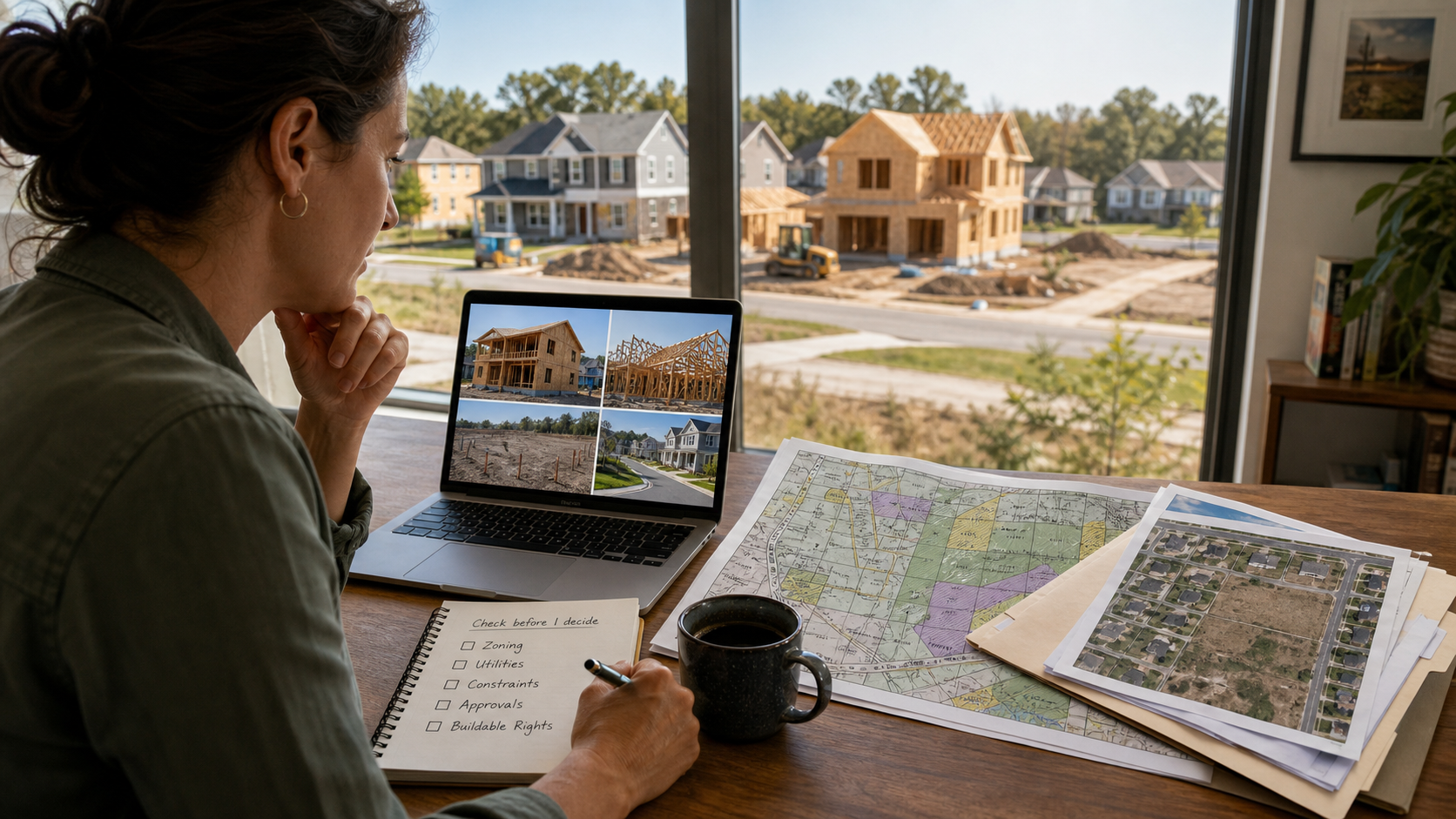
Before assuming future inventory will arrive near a specific property, move from national data to parcel-level facts.
Check whether nearby land is:
- Zoned for the proposed housing type - Inside a utility-service area - Subject to subdivision, environmental, floodplain, or access constraints - Covered by an approved site plan, tentative map, or recorded development agreement - Actually buildable under current setbacks, density limits, height rules, and easements
A permit trend tells you that supply pressure may be building. Public land-use records tell you whether that pressure can affect a particular street, view, commute, or property decision.
The Practical Rule
Treat permits as the early signal, starts as the confirmation, and local records as the proof. National housing data can frame the question; it cannot answer what is buildable beside a specific home.
Before making a PropertyDeepDive decision, check the applicable public zoning, permit, parcel, and recorded-rights records for the property and surrounding land.
What To Do Next
Use the national market signal to decide what to verify, then check the address itself. Run a PropertyDeepDive report before pricing, buying, refinancing, or relying on a valuation estimate so the public records, ownership history, taxes, permits, liens, and comparable-sale context are part of the decision.